Sun and Solstice – Additional Information
Thank you for visiting this website, as promised at the event this page has been created for those who want to dive deeper into the history of the artefacts showcased at the Bryn Celli Ddu event.
I have added the bilingual factsheet for each item, followed by a notes section which has links to extra information which is available to view online. I have only included weblinks to sites where the information is not hidden behind a paywall – but be aware that some of the sites do require you to create a free account. This account will then let you read all the papers uploaded on the site. As a note of caution you can access absolutely everything you need on the free tier of access so you do not need to pay or enter any bank details!
Haul a Heuldro
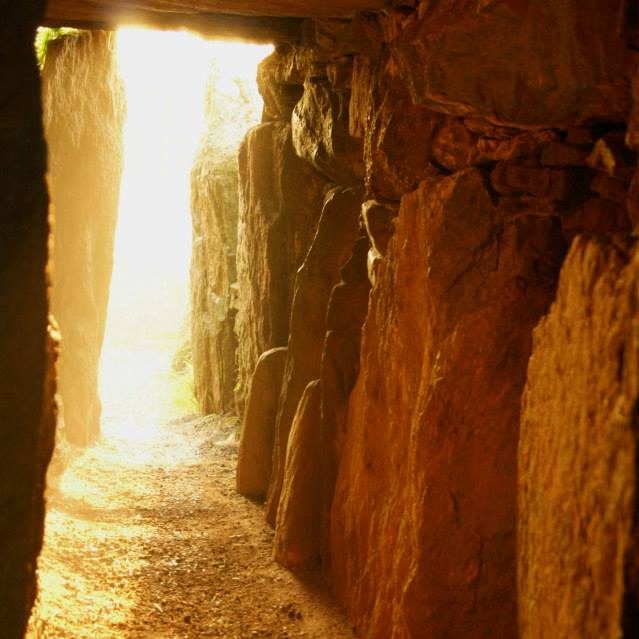
Wrth i ni ymuno â’n gilydd ym Mryn Celli Ddu unwaith eto i ddathlu’r heuldro, rydyn ni’n archwilio pwysigrwydd yr haul i bobl Gymreig y gorffennol. Fel llawer o henebion megalithig fel y rhai yn Brú na Bóinne (Dyffryn Boyne) Iwerddon, mae Bryn Celli Ddu wedi ei adeiladu ar aliniad solar – Heuldro’r Haf yn yr achos hwn.
Mae delweddau o’r haul wedi ymddangos mewn celf o amgylch y byd trwy gydol hanes dynol, sy’n ymestyn yn ôl i’n gorffennol dwfn. Rydym ni wedi dewis arteffactau hynafol ledled Cymru y credir eu bod wedi’u hysbrydoli gan yr haul.
Sun and Solstice
As we gather at Bryn Celli Ddu once more to celebrate the solstice we explore the importance of the sun to the past people of Wales. Like many megalithic monuments such as those in the Brú na Bóinne (Boyne Valley) Ireland, Bryn Celli Ddu was built on a solar alignment – in this case the Summer Solstice.
Images of the sun appear in art all around the world throughout human history, stretching back into our deep past. We have chosen a few ancient artefacts from around Wales which are believed to have been inspired by the sun.
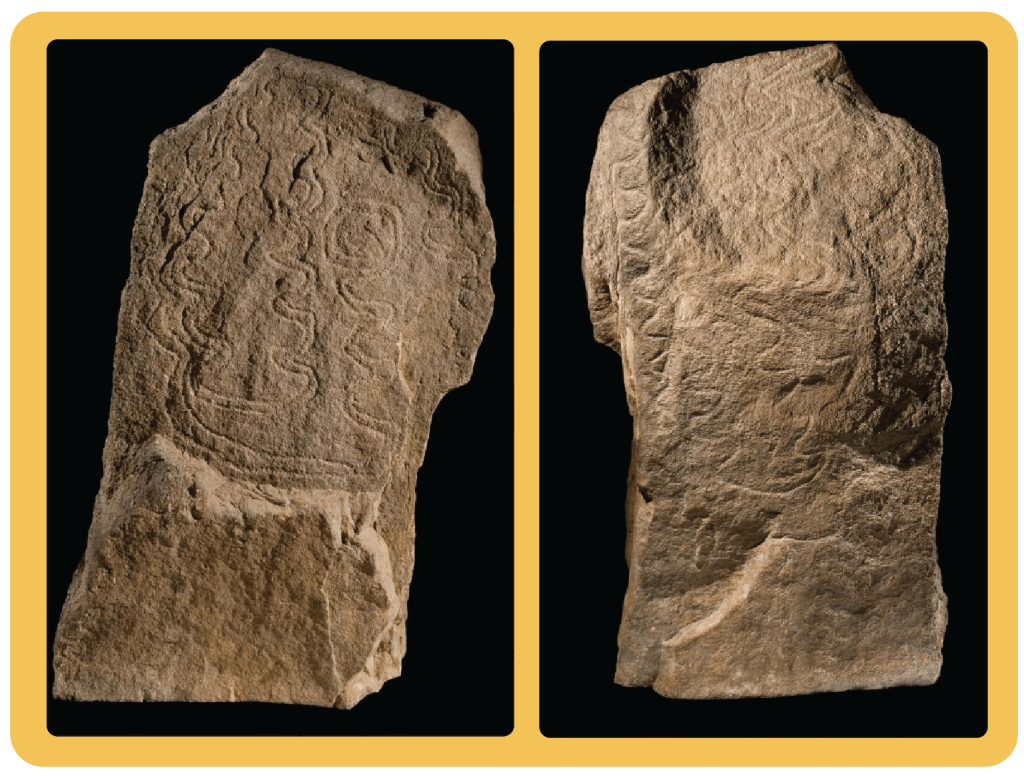
Image Source and Copyright Amgueddfa Cymru
Rock Art and Megalithic Tombs – Circles, Spirals and Pathways
Rock art in Britain and Ireland is described as ‘abstract’ because it does not try to show an accurate picture of people, places or things. It uses symbols, lines and shapes to creates images which different people will see different things in. Some people see the sun, stars, waves or even people carved onto the rock. Others argue that the patterns are not meant to be read and are formed by people in trances or altered states of mind.
Art can also have a language which has to be learnt but without someone to teach us the language is lost. It may be that the people who created and visited rock art sites thousands of years ago could ‘read’ the stones in a way which we cannot understand. Think of how many symbols you see every day and understand without explanation which a person from another culture might not – from the dragon on the Welsh Flag to the lines on the road showing you where you can cross and where you cannot park!
In the carving at Bryn Celli Ddu I see the suns rays travelling into the tomb – what can you see?
Celf ar Greigiau a Beddrodau Megalithig – Cylchoedd, Troellau a Llwybrau
Mae Celf ar Greigiau ym Mhrydain ac Iwerddon yn cael ei disgrifio fel ‘haniaethol’ gan nad yw’n trio dangos lluniau manwl gywir o bobl, lleoedd na phethau.. Mae’n defnyddio symbolau, llinellau a siapiau i greu delweddau, a bydd pobl wahanol yn gweld pethau gwahanol. Bydd rhai pobl yn gweld yr haul, sêr, tonnau neu bobl wedi’u cerfio yn y garreg. Bydd eraill yn dadlau nad yw’r patrymau i fod i gael eu darllen a’u bod nhw wedi cael eu creu gan bobl mewn swyngwsg neu gyflwr meddyliol sydd wedi newid.
Gall celf fod ag iaith y mae angen ei dysgu, ond heb rywun i addysgu’r iaith, bydd hi’n diflannu.. Efallai’r oedd y bobl a greodd y gelf ac a ymwelodd â hi filoedd o flynyddoedd yn ôl yn gallu ‘darllen’ y creigiau mewn ffordd nad ydyn ni’n ei deall. Meddyliwch faint o symbolau rydych chi’n gweld bob dydd ac yn eu deall heb esboniad y byddai person o ddiwylliant arall ddim yn eu deall. O’r ddraig ar Faner Cymru i’r llinellau ar y ffordd i ddweud ble gallwch chi groesi neu barcio.
Yn y cerfwaith ym Mryn Celli Ddu, dw i’n gallu gweld pelydrau’r haul yn teithio i mewn i feddrod – beth ydych chi’n gallu ei weld?
Rock Art in Cymru – Additional Information
The Cadw page full of information about Bryn Celli Ddu including the site history and events
https://cadw.gov.wales/visit/places-to-visit/bryn-celli-ddu-chambered-tomb.
One of my favourite resources for children ever! Cadw have produced a series of comics about two of the tomb sites – Bryn Celli Ddu and Barclodiad y Gawres and they are just beautiful. Amazing artwork by Pete Fowler.
https://cadw.gov.wales/learn/fun-activities/cartoons-comics-colouring/cadw-comics
Report on the original excavations by Hemp at Bryn Celli Ddu before the monument was reconstructed. Following on from this paper is the excavation of the neighbouring ring cairn site.
https://journals.library.wales/view/4718179/4734799/257#?xywh=-1106%2C364%2C5372%2C2533.
Open access research paper discussing the archaeology and history of Bryn Celli Ddu. Paper explores the site development and solstice alignment.
https://www.researchgate.net/publication/259432483_Bryn_Celli_Ddu_Passage_Tomb_Anglesey_Alignment_Construction_Date_and_Ritual.
The Cadw information page for Barclodiad y Gawres.
https://cadw.gov.wales/visit/places-to-visit/barclodiad-y-gawres-chambered-tomb.
This site has brought together the Cadw virtual tours of the Passage Graves at Bryn Celli Ddu and Barcloddiad y Gawres. The site has a wealth of other information about rock art.
https://www.bradshawfoundation.com/rockartnetwork/virtual_world_of_welsh_rock_art.php.
Link to National Library of Wales online journal section (open access). Frances Lynch’s 1967 paper discussing the rock art at Barclodiad y Gawres and further afield. Lovely clear illustrations in this publication.
https://journals.library.wales/view/4718179/4745051/9#?xywh=-3370%2C265%2C9674%2C3647
Link to “Megalithic Art: A Visual Repertoire for the Dead” a paper by Dr. George Nash discussing the rock art around Europe. Excellent overview of the topic.
https://www.researchgate.net/publication/344350944_Megalithic_Art_A_Visual_Repertoire_for_the_Deadfa Cymru
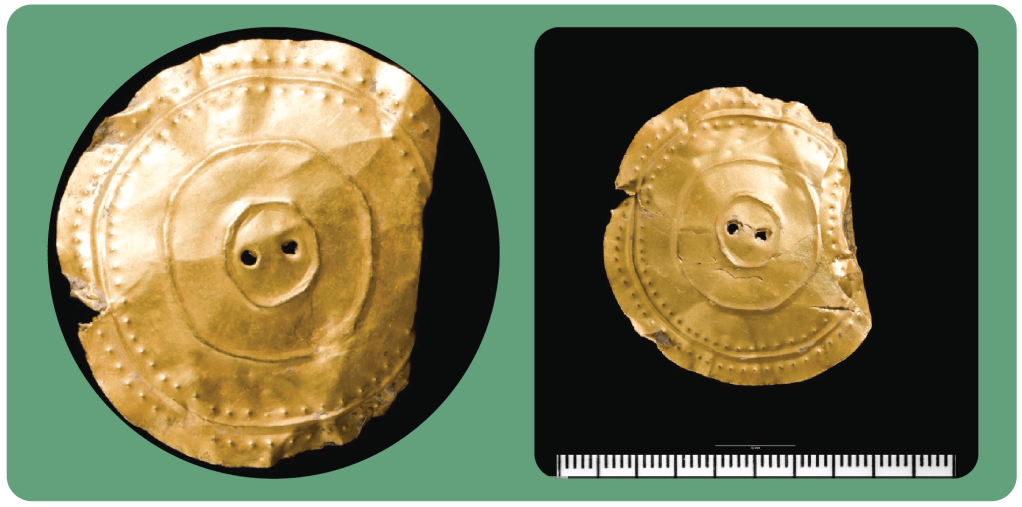
Image Source and Copyright Amgueddfa Cymru
The Banc Tynddol Sun Disc
This rare item was found during archaeological excavations near the Bronze Age copper mine at Copa Hill, Cwmystwyth. Dated to the beginning of the Early Bronze Age (around 2450-2150 BC) it is one of the earliest gold ornaments found in Wales. The Sun Disc had been placed in a grave which had been covered by a stone cairn. The body had not survived well in the acidic soil, so we do not know the age or sex of the person buried with the disc.
It is not certain how the items were used but they were likely to have been sewn onto clothing. Sun Discs have been found singly and in pairs in the UK and Ireland – or in Orkney as a set of four! Examples have also been found in France, Spain and Portugal.
They are called Sun Discs because of their shape and colour and are decorated with patterns which look like the rays of the sun.
Disg Haul Banc Tynddol
Cafodd yr eitem brin hon ei darganfod yn ystod cloddiad archaeolegol ger y mwynglawdd copr o’r Oes Efydd ym Mryn Copa, Cwmystwyth. Roedd yr eitem wedi ei gwneud ar ddechrau’r Oes Efydd (tua 2450-2150 CC) ac mae hi’n un o’r addurniadau aur cyntaf a ganfuwyd yng Nghymru. Roedd y Disg Haul wedi ei osod mewn bedd oedd wedi ei orchuddio gan garnedd o gerrig. Nid oedd y corff wedi goroesi’n dda yn y pridd asidig, felly nid ydym yn gwybod oedran na rhyw y person a gladdwyd gyda’r disg.
Nid yw’n sicr sut roedd yr eitemau’n cael eu defnyddio ond mae’n debyg y byddent wedi cael eu gwnïo i ddillad. Mae Disgiau Haul wedi cael eu canfod fel eitemau unigol ac mewn parau yn y Deyrnas Unedig ac Iwerddon – neu fel set o bedwar yn Orkney! Mae enghreifftiau ohonynt wedi cael eu canfod yn Ffrainc, Sbaen a Phortiwgal.
Maen nhw wedi’u henwi’n Ddisgiau Haul oherwydd eu siâp a’u lliw ac maen nhw wedi’u haddurno â phatrymau sy’n edrych fel pelydrau haul.
The Banc Tynddol Sun Disc Additional Information
The item is within the collections at Amgueddfa Cymru and is on display at the St Fagans site. This record has lovely images of the disc and basic information about the discovery. https://museum.wales/collections/online/object/e47ada84-1b31-30bc-8888-4e92bf5ef245/Early-Bronze-Age-gold-disc/
Open access paper written by the original excavator of the sun disc. You can either scroll down to read it or download the paper. This paper discusses the excavation and the wider significance of the find. It also discusses the significance of copper mining in Cymru during the early bronze age. https://www.researchgate.net/publication/333121482_COPPER_MINING_PROSPECTION_AND_THE_BEAKER_PHENOMENON_IN_WALES_-_THE_SIGNIFICANCE_OF_THE_BANC_TYNDDOL_GOLD_DISC
I absolutely loved this paper – the images are just incredible! Although centred on Ireland where sun discs are a more numerous find, this paper discusses the sun discs and their relationship with other gold items in Ireland, Britain and Europe. A fantastic read. https://www.academia.edu/11627053/Here_comes_the_sun_solar_symbolism_in_Early_Bronze_Age_Ireland
And finally, again not specific to Cymru but a fascinating article on how the discs were made and an introduction to this material in Scotland. https://www.nms.ac.uk/collections/departments/scottish-history-archaeology/projects/prehistoric-gold-in-britain/the-knowes-of-trotty-discs
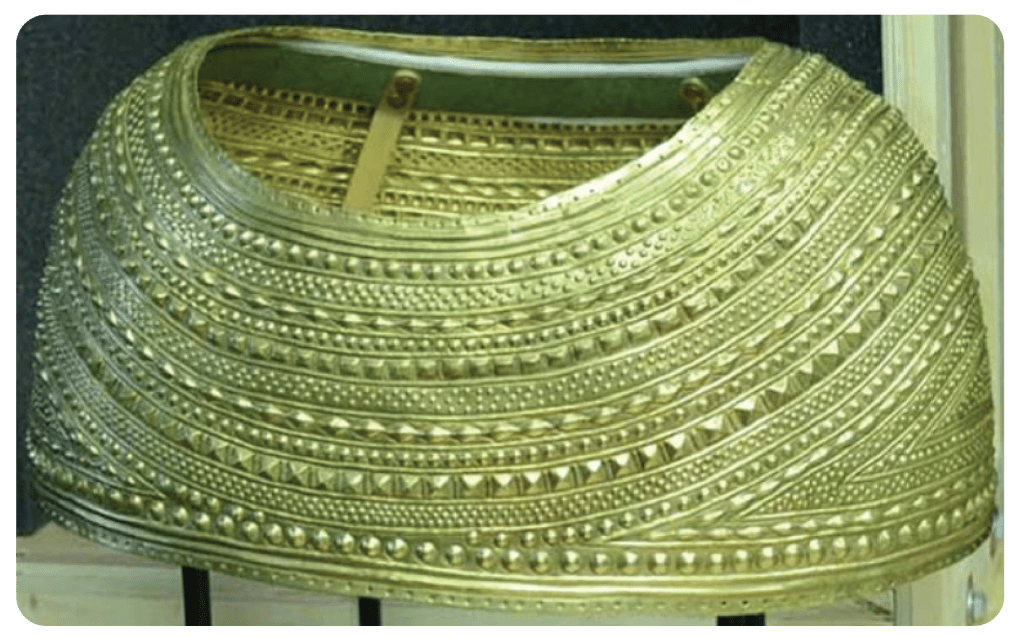
Image Source and Copyright Amgueddfa Cymru
The ‘Mold Cape’ (Bryn yr Ellyllon)
This spectacular gold cape is one of the most famous Welsh archaeological artefacts. It was found in a grave beneath a stone cairn and was discovered in 1833 when workmen were taking the stone for road construction. A second burial – this time a cremation in an urn was also found within the cairn.
A skeleton was found wearing the cape, with strings of as many as 300 amber beads around its neck (but only one now survives). Also found within the grave were a bronze knife, small gold sheet fragments from a second gold cape, and some woven fabric. Sadly the human remains were not placed in a museum, so we know very little about who the cape was buried with. From the size of the cape it could have been worn by a woman, man or a teenager of moderate stature.
Although there is no organic material surviving from the grave which can be radiocarbon dated, comparisons with other gold items in Wales and neighbouring countries suggests an Early Bronze Age date (2500 – 1600 BC).
Mantell Aur yr Wyddgrug (O Fryn yr Ellyllon)
Y mantell ysblennydd hon yw un o arteffactau archaeolegol mwyaf enwog Cymru. Cafodd ei darganfod ym 1833 mewn bedd o dan y garnedd lle’r oedd dynion gwaith yn cymryd carreg i adeiladu ffordd newydd. Bu ail gladdedigaeth – y tro hwn amlosgiad mewn wrn a ddarganfuwyd hefyd o fewn y garnedd.
Canfuwyd ysgerbwd a oedd yn gwisgo’r fantell gyda llinynnau o leiniau ambr o gwmpas y gwddf. Hefyd yn y bedd oedd cyllell efydd, darnau o ddalennau aur o ail glogyn ac ychydig o ffabrig wedi’i wehyddu. Yn anffodus, ni chafodd y gweddillion dynol eu gosod mewn amgueddfa, felly ychydig iawn yr ydym yn gwybod am gyda phwy y cafodd y fantell ei chladdu. O faint y fantell, gallai fod wedi cael ei gwisgo gan fenyw, dyn neu blentyn yn ei arddegau o daldra canolig.
Er nid oes unrhyw ddefnydd organig yn goroesi o’r bedd i’w ddefnyddio i ddyddio â radio carbon, mae cymariaethau ag eitemau aur eraill yng Nghymru a gwledydd cyfagos yn awgrymu dyddiad o’r Oes Efydd Gynnar (2500 – 1600 CC).
The ‘Mold Cape’ Additional Information
Although sadly the cape is no longer in Cymru, Amgueddfa Cymru do have a replica and there are interesting images/videos about how it was made and gold working techniques. https://museum.wales/collections/online/object/7d3bd22d-a0bc-35ed-bfb4-1f26e120c943/Mold-Cape Replica/?field0=string&value0=gold&field1=with_images&value1=on&page=14&index=157.
The cape is held and displayed by the British Museum. A link to the item with images of the cape can be found at https://www.britishmuseum.org/collection/object/H_1836-0902-1.
A link an 1848 article about the cape published in the Archaeologia Cambrensis journal (the National Library Wales has digital copies of all editions from 1846-2000 so worth a look through). Has an account of the discovery of the cape and a ghost story! The later sections of the paper where the author muses about the burial as a fallen chieftain are sadly a fantasy but interesting to see how interpretations change over time. Occasionally there are issues with the links not taking you to the correct page so if this happens scroll to page 98. https://journals.library.wales/view/2919943/2991234/7#?xywh=-1422%2C1081%2C5024%2C2369.
An open access link to a paper written on the history of the cape, the date of the artefact and its place within the early bronze age world. Click on the red Download text to read the paper. https://archaeologydataservice.ac.uk/library/browse/details.xhtml?recordId=3246097.
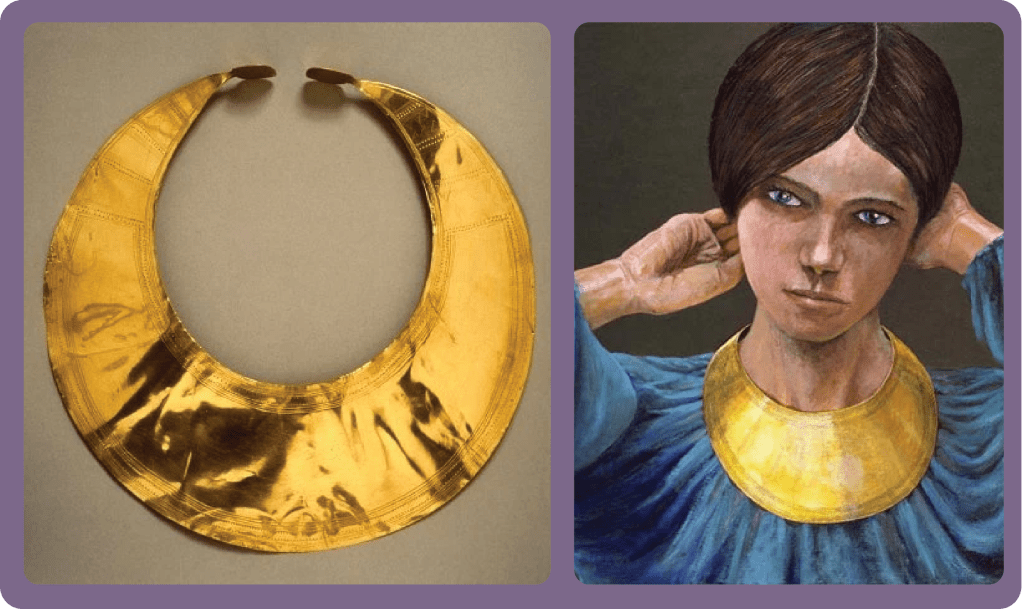
Image Source and Copyright Amgueddfa Cymru
The Llanllyfni Lunula
Found in a peat bog near Llanllyfni by a farmer in 1869, the lunula is made from a single gold rod which was hammered into shape. It dates to the Early Bronze Age (2400-2000 BC) and was worn around the neck. The lack of wear on the lunula shows it had been rarely used, and it is suggested these items had ritual or religious significance and were only used on special occasions and likely only by certain people.
Around 100 lunula have been found, with 80 of these recorded in Ireland. Examples have been found in Britain, France and Belgium and variations have been found in Portugal and Denmark. Some archaeologists believe that these items show images of boats similar to coracles and that these boats carry the sun across the sky each day.
Lwnwla Llanllyfni
Wedi ei ddarganfod gan ffermwr ym 1869 wrth gloddio am fawn, roedd y lwnwla wedi’i wneud o roden sengl o aur ac wedi’i siapio gan forthwyl. Mae’n dyddio o’r Oes Efydd Gynnar (2400-2200 CC) ac roedd yn cael ei wisgo o gwmpas y gwddf. Yn ôl y diffyg traul, nid oedd y lwnwla’n cael ei ddefnyddio’n aml, ac mae’n debyg yr oedd gan yr eitemau hyn arwyddocâd crefyddol iawn. Roedden nhw’n cael eu defnyddio ar achlysuron arbennig gan bobl bwysig.
Darganfuwyd tua 100 lwnwla, gyda 80 ohonynt wedi’u cofnodi yn Iwerddon. Mae enghreifftiau wedi cael eu canfod ym Mhrydain, Ffrainc a Gwlad Belg gydag amrywiadau ym Mhortiwgal a Denmarc. Mae rhai archaeolegwyr yn credu bod yr eitemau hyn yn dangos cwch fel cwryglau ac mae’r cwch yn cario’r haul ar draws yr awyr bob dydd.
The Llanllyfni Lunula Additional Information
Photographs and description of the lunula and its discovery https://museum.wales/articles/1356/Stunning-gold-relic-unearthed-in-Gwynedd/.
The lunula is held and displayed in the British Museum. Detailed images showing decoration and a description can be found at https://www.britishmuseum.org/collection/object/H_1869-0619-1.
Also recommended for the Banc Tynddol Sun Disc, this beautifully illustrated also discusses lunula and their relationships with other gold items in Ireland, Britain and Europe. A fantastic read.
https://www.academia.edu/11627053/Here_comes_the_sun_solar_symbolism_in_Early_Bronze_Age_Ireland.
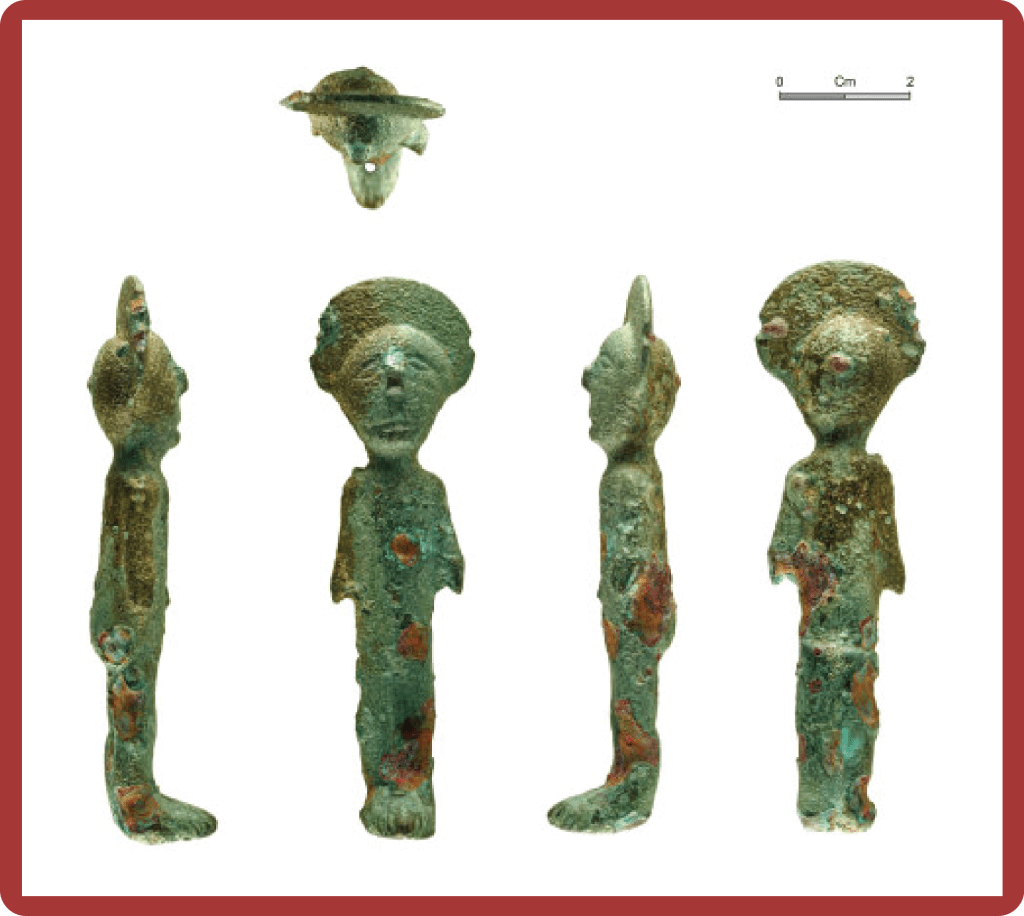
Image Source and © Amgueddfa Cymru (PAS Cymru)
Culver Hole Cave Figurine
This mask is inspired by a bronze figurine found in a cave in the Gower. The artefact dates to the Late Iron Age or Romano-British period (100 BC – AD 200) and depicts a person with a crescent headdress which may represent the sun or moon. Although this figure is not shown as female, a second clearly female figurine was found in the same cave. She is shown holding two babies and is interpreted as a ‘Mother Goddess’.
This figure is also very similar to an example found near the River Severn in Gloucester. This figurine is clearly female and shares the same crescent headdress. She too is interpreted as a fertility deity.
Ffiguryn Ogof Culver Hole
Mae’r mwgwd hwn wedi’i ysbrydoli gan ffiguryn efydd a gafodd ei ddarganfod mewn ogof yn y Gŵyr. Mae’r arteffact yn dyddio o’r Oes Haearn hwyr neu’r Oes Frythonaidd-Rufeinig (100 CC – 200 OC) ac yn darlunio person â helm siâp cilgant. Mae’n bosib bod yr helm yn cynrychioli’r haul neu’r lleuad. Er nad yw’r ffiguryn yn cael ei ddangos fel un benywaidd, cafodd ail un, y mae’n glir ei fod yn fenywaidd, ei ddarganfod yn yr un ogof.. Mae hi’n cael ei dangos yn dal dau faban ac yn cael ei dehongli fel “Mam-Dduwies”.
Mae’r ffiguryn hwn yn debyg iawn i enghraifft a ddarganfuwyd ger yr Afon Hafren. Mae’r ffiguryn hwn yn bendant yn fenywaidd ac mae hi’n gwisgo helm o’r un steil. Mae hi wedi cael dehongli fel “Mam-Dduwies” hefyd.
The Culver Hole Cave Figurine Additional Information
The figurine appears to have been returned to the finder and cannot therefore be visited. There are however records of the artefact in the Portable Antiquity Scheme database which include detailed photographs and text description. Scroll right down to the notes section at the bottom of the page (after the references) for an interpretation by expert Dr Miranda Aldhouse-Green.
https://finds.org.uk/database/artefacts/record/id/1020613.
This figurine was not the only one found in Culver Hole Cave – a second female figurine was found by children in the 1930’s. This one is in the Amgueddfa Cymru collections. Details can be found at https://amgueddfa.cymru/casgliadau/arlein/object/9d9fe376-c7e0-3f0a-8f84-f56b9d5a9b96/Roman-copper-alloy-figurine/?field0=string&value0=berain&field1=with_images&value1=on&page=43&index=505
There are clear stylistic links between the headdresses worn by the Culver Hole Cave figurine a female “Mother Goddess” found at Aust. She can be seen at https://intarch.ac.uk/journal/issue31/2/results.cfm?id=1170.
 Annwn BC